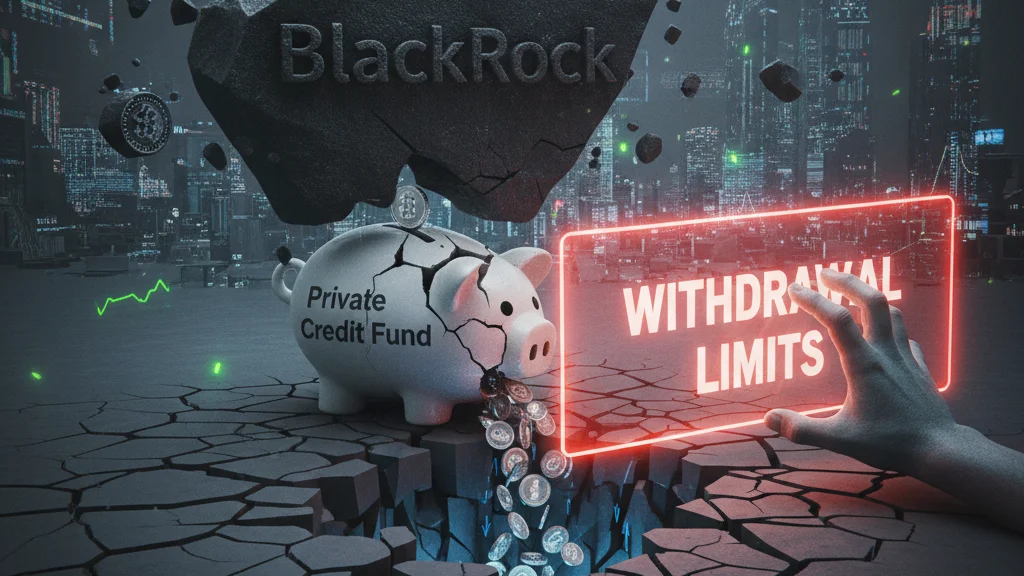
Tokenized Assets Top $25B After Nearly Quadrupling

What to Know
- $25 billion — tokenized real-world assets (excluding stablecoins) have crossed this threshold onchain, per RWA.xyz data
- Six asset categories now exceed $1 billion each: U.S. Treasuries, commodities, private credit, institutional alt funds, corporate bonds, and non-U.S. government debt
- Only 11.8% of RWA-backed stablecoin supply — about $1 billion out of $8.49 billion — is actually deployed inside DeFi protocols
- A February 2026 Brickken survey found 53.8% of tokenized asset issuers are motivated by capital formation, while just 15.4% cited liquidity
Tokenized real-world assets have now surpassed $25 billion in onchain value — a figure that would have looked absurd just twelve months ago when the market sat near $6.4 billion. Nearly quadrupling in a year is the kind of growth that earns conference keynotes and VC decks. But dig past the headline number and the picture gets messier than the press releases suggest.
Six Asset Classes Cross the $1 Billion Mark
Six tokenized asset categories have now broken the $1 billion onchain threshold, according to tokenized real-world assets tracker RWA.xyz. The list covers U.S. Treasuries, commodities, private credit, institutional alternative funds, corporate bonds, and non-U.S. government debt. That breadth matters — a year ago, you could barely count the categories on one hand.
The tokenized U.S. Treasury market alone tells that story clearly. Offerings in that segment grew from 35 to more than 50 over the past year, according to data compiled by Nexus Data Labs. Asset managers including BlackRock, Fidelity, and WisdomTree all launched tokenized fund products during that stretch, helping push the sector past the $20 billion milestone at the end of 2025 before accelerating further into 2026.
Does $25 Billion in RWAs Actually Mean Anything?
Here's the part that tends to get glossed over. The BlackRock tokenized fund launch and its peers represent real institutional commitment — but onchain transfer data tells a different story about how these assets actually behave. The largest RWA transactions cluster around $10 million per transfer, a pattern that looks a lot less like liquid markets and more like institutional allocation batching. Assets are moving. Not trading.
That distinction matters if you're trying to figure out whether tokenization is building a new financial infrastructure or just rebundling old financial products in a blockchain wrapper. Right now, the evidence leans toward the latter. Supply is growing fast. Activity — real, continuous market activity — is a different question entirely.
88% of RWA-Backed Stablecoins Haven't Touched DeFi
Nexus Data Labs estimates roughly $8.49 billion in RWA-backed stablecoin supply currently exists onchain. Of that, about $1 billion — or 11.8% — is actually deployed inside DeFi lending and trading protocols. The remaining 88% sits outside, locked away from the composable financial systems that were supposed to be the whole point.
The reason is compliance. Most tokenized assets come with KYC requirements, transfer restrictions, and whitelisting rules baked in at the contract level. That's fine for institutional buyers who need the guardrails. But it also means these tokens can't simply plug into Aave or Uniswap the way ETH or USDC can. Permissioned assets and permissionless infrastructure don't naturally mix.
A Brickken tokenization survey conducted in February 2026 reinforced where institutional priorities actually sit: 53.8% of tokenized asset issuers said capital formation and fundraising efficiency drive their tokenization decisions. Only 15.4% mentioned liquidity. That gap explains the DeFi disconnect neatly — most issuers aren't trying to build liquid markets. They're trying to raise capital faster.
What Does RWA Growth Mean for DeFi's Future?
Some projections now place the tokenized asset market above $400 billion by year-end — a number that, if accurate, would make today's $25 billion look like a rounding error. Whether that growth actually transforms the financial system depends almost entirely on whether permissioned tokenized assets start integrating with composable DeFi infrastructure. Right now, the answer is mostly no.
The unlocks that would change this — cross-chain compliance layers, programmable KYC, institutional-grade DeFi interfaces — are being built, slowly. But until tokenized Treasuries and private credit instruments can actually function as collateral inside permissionless lending protocols at scale, the sector's growth story is largely a supply story. And supply without utilization is just a very expensive ledger entry.
Stay ahead of the market.
Crypto news and analysis delivered every morning. Free.
More from TheCryptoWorld
About the Author
Contributor
TheCryptoWorld Staff is a contributor at TheCryptoWorld.
View all contributors
Follow thecryptoworld.io on Google News to receive the latest news about blockchain, crypto, and web3.
Follow us on Google News